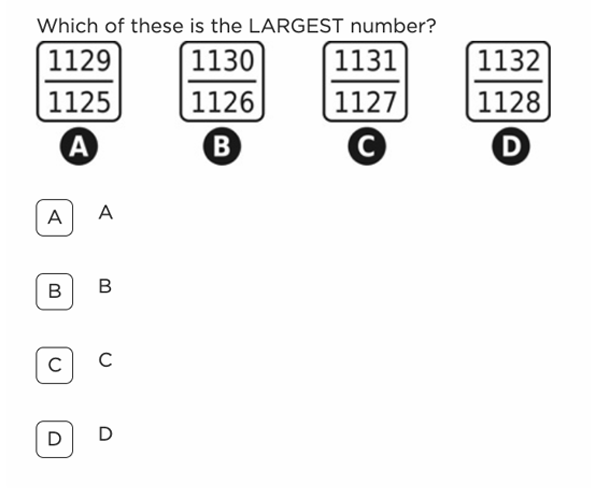
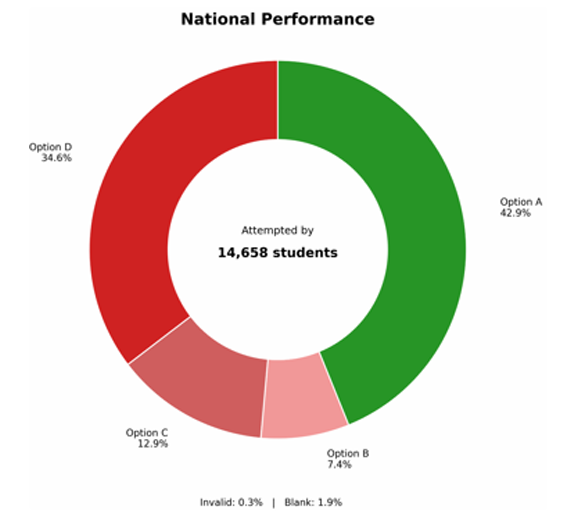
This question tests studentsʼ ability to compare fractions where both the numerators and
denominators are different. More specifically, it checks whether students can look beyond the
surface size of the numbers and reason about the actual value of each fraction.
The four fractions are:
1129/1125, 1130/1126, 1131/1127 and 1132/1128.
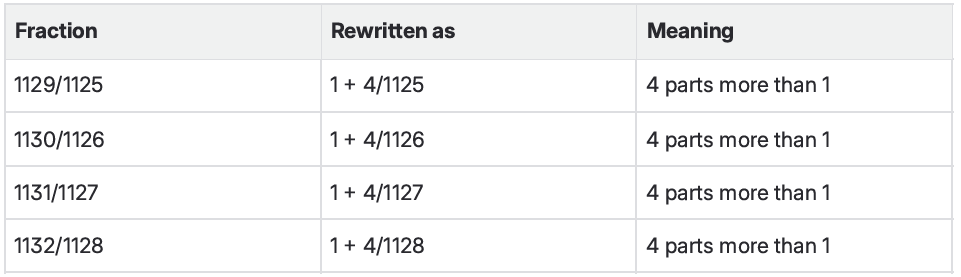
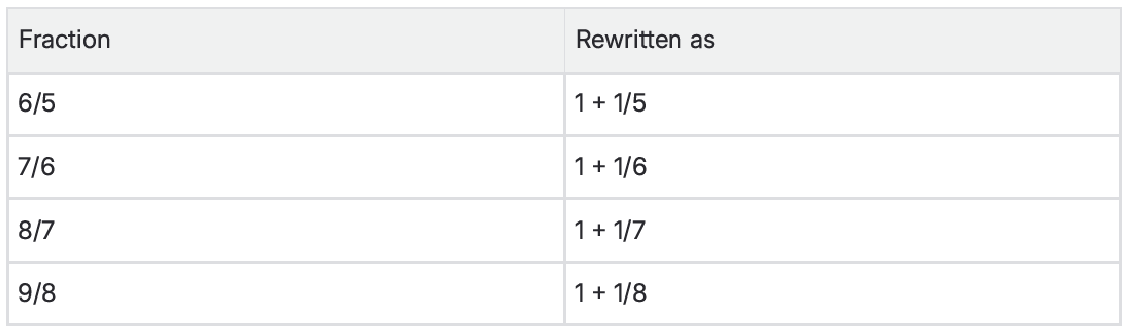
Each of these fractions is slightly greater than 1. A useful way to compare them is to rewrite
them as:
1129/1125 = 1 + 4/1125
1130/1126 = 1 + 4/1126
1131/1127 = 1 + 4/1127
1132/1128 = 1 + 4/1128
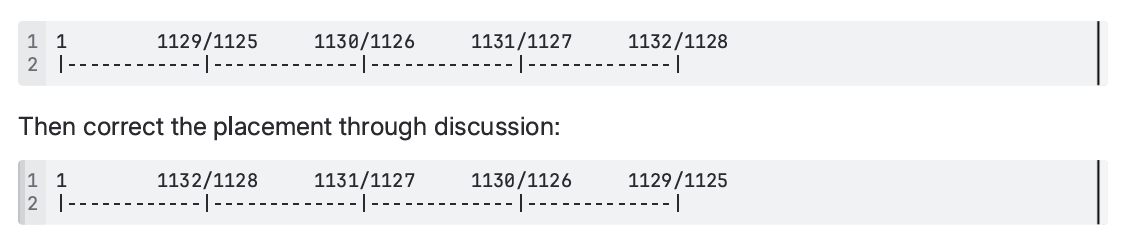
Since all four fractions are 1 plus something, students need to compare 4/1125, 4/1126, 4/1127
and 4/1128. When the numerator is the same, the fraction with the smaller denominator is larger.
Therefore, 4/1125 is the largest of these parts, making 1129/1125 the largest number.